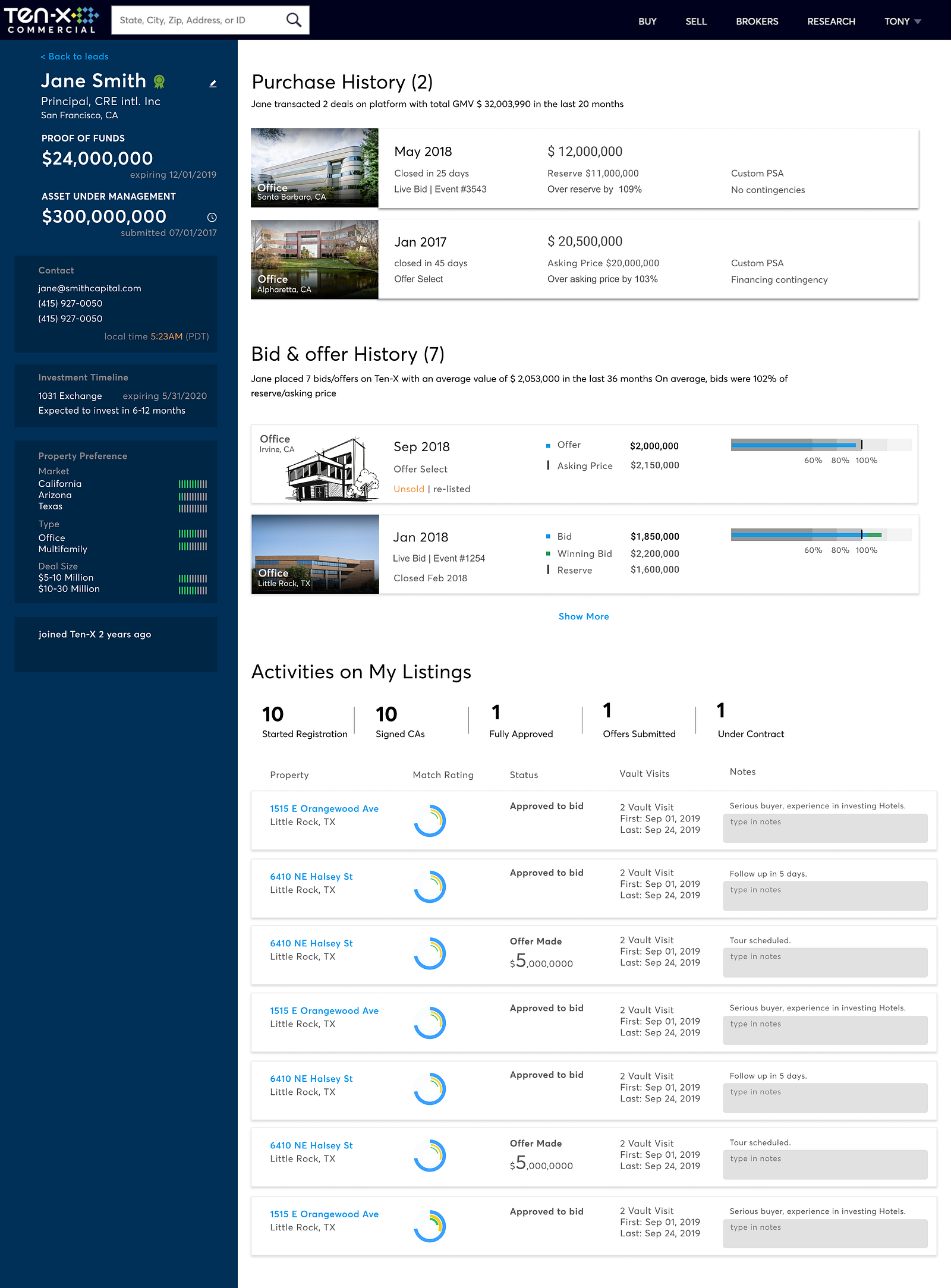
Design a bridge to trust and action
Redesigned buyer profiles for a $20B+ commercial real estate auction platform, building broker confidence across deal phases.
Design a bridge to trust and action
The world of Commercial Real Estate (CRE) transactions is a high-stakes game, with multi-million dollar deals hinging on a delicate balance of trust, expertise, and negotiation. Traditionally, these transactions have been conducted locally, where parties can rely on personal relationships and local insights to navigate the market.
However, an increasing number of CRE transactions are now taking place online, with billions of dollars in assets changing hands through digital platforms. At the forefront of this shift is Ten-X, an online auction platform that has revolutionized the way CRE transactions are conducted. With over 20 billion in assets sold to date (end of 2019), Ten-X has emerged as a major player in the world of online CRE transactions, offering a streamlined and efficient way for buyers and sellers to connect and close deals.
 Decision Making with Unstructured Information
The Project Background
Ten-X brought in buyers from all over the world for US properties, opened up the opportunity for both buyer and seller. At the same time, shaking up the solid triangle relationship of buyer, seller and broker. In most cases, seller broker and seller have no pre-existing information about the potential buyers. Among the hundreds of leads brought in by the platform, who should the seller/broker move forward with?
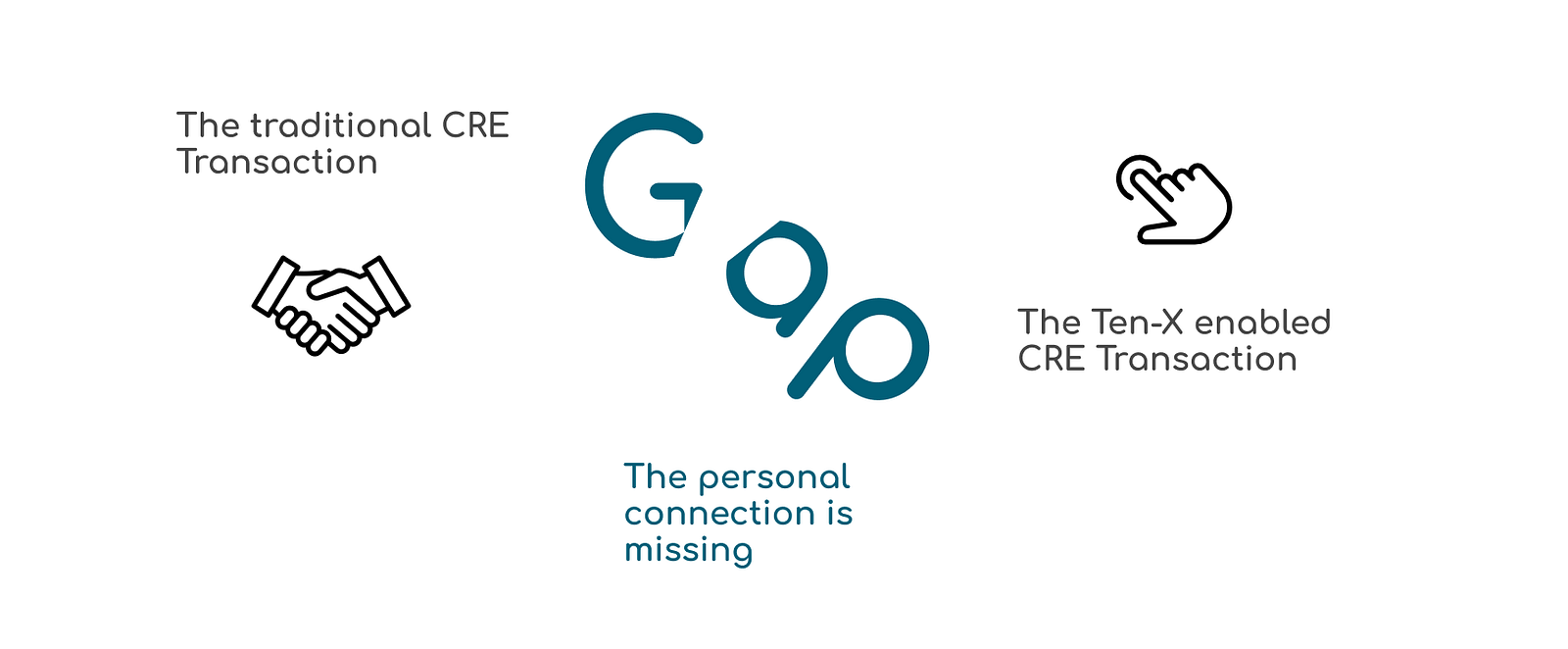
Being the biggest platform for online CRE transaction, we are aware of the gap we need to bridge to get a bigger share of the cake — not to compete with another online platform, but to win the 90% of CRE transaction that still happen in the local comfort zone.
In the existing product, buyer information had been organically added into the “leads” table”, as a row expansion, which started out useful and soon grew unusable as the information grows and context changes.
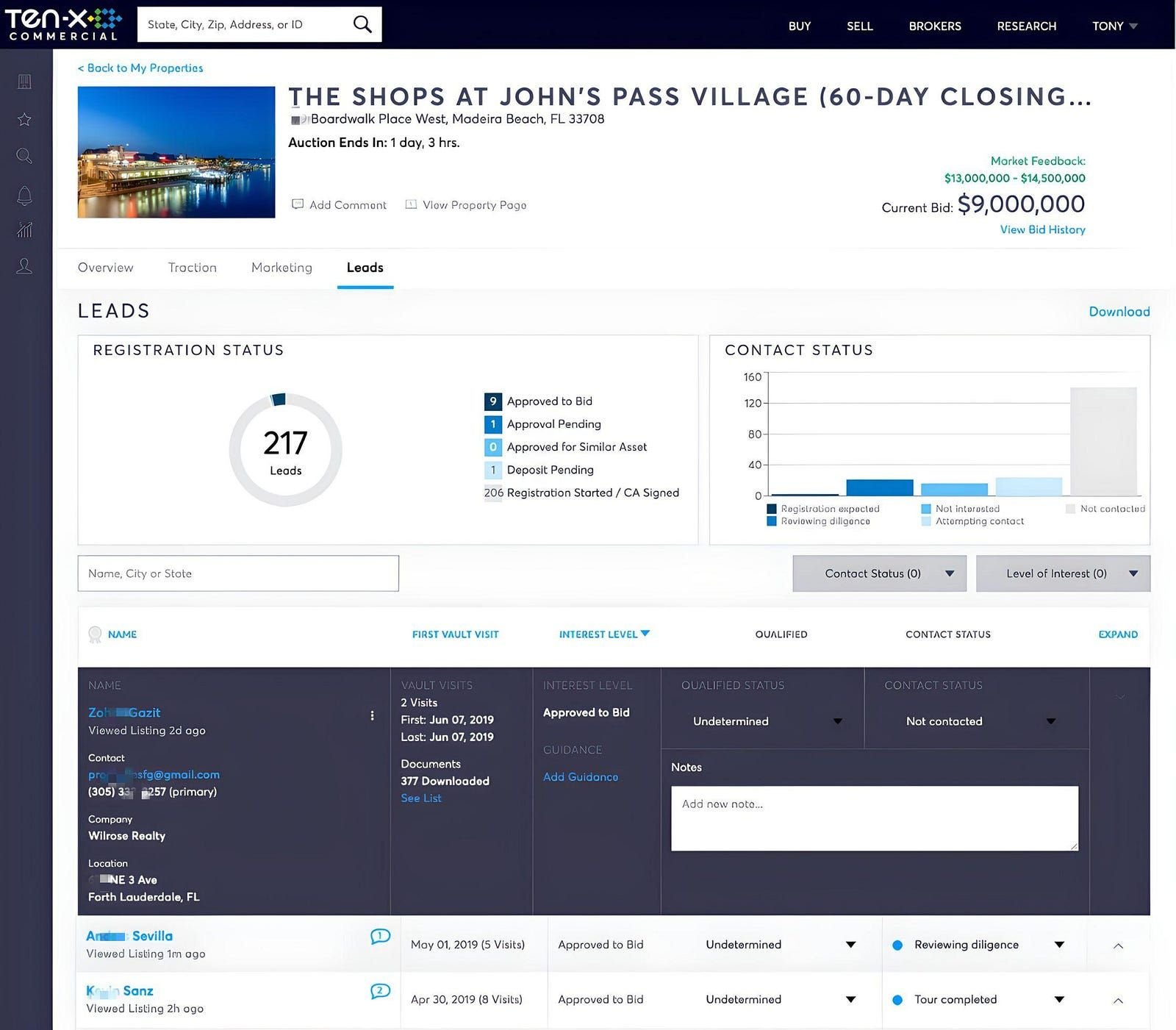 Buyer Info Panel before the Project
Early Exploration
The project started with the direction of solving the usability issue of existing layout, so the early exploration focused more on presenting the information we have available in a more organized way.
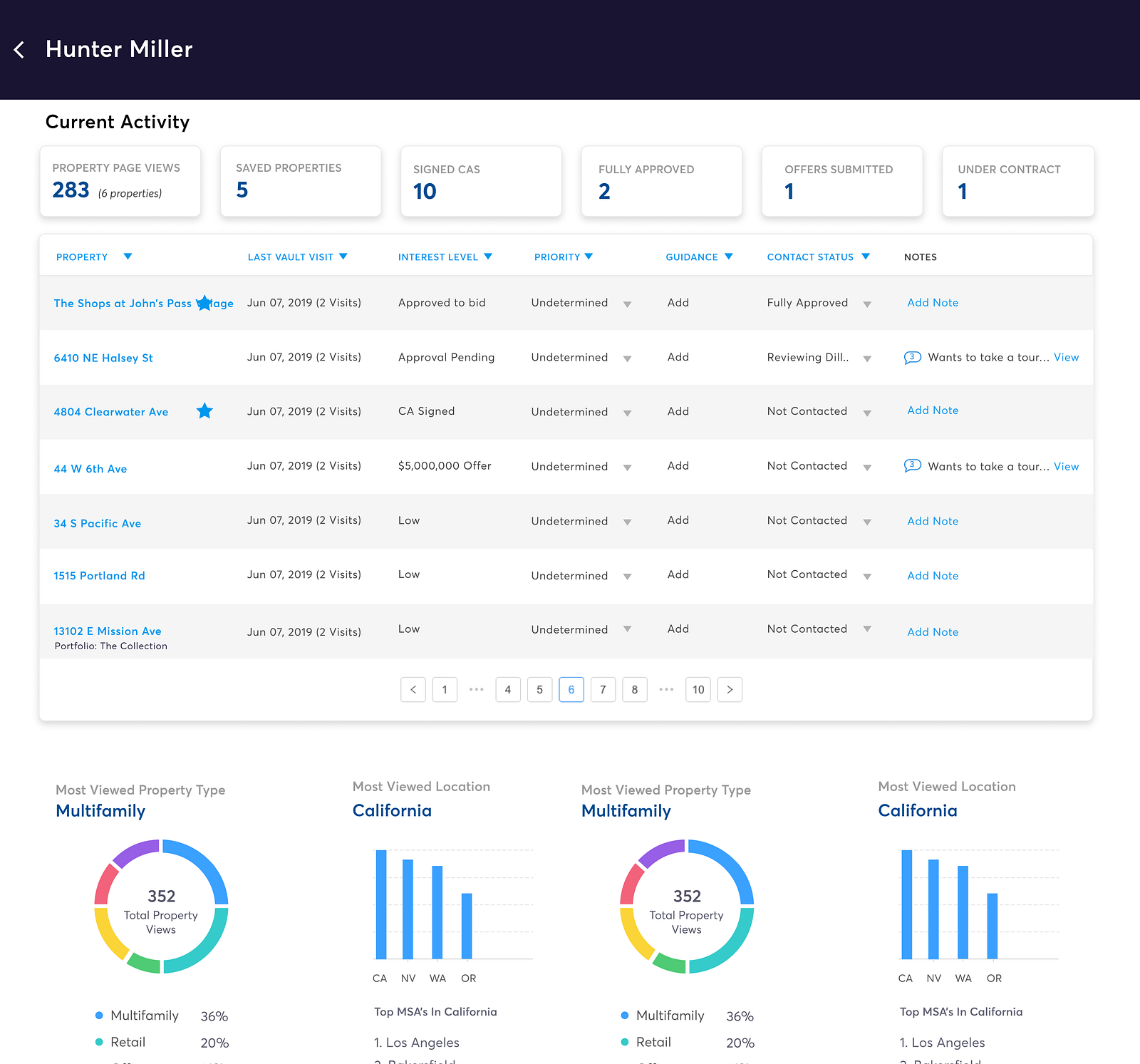 An Early Exploration
After this version was presented, the product team realized it is not the way to bridge the gap. My manager called me in to ask if I want to take a stab at it. Owning the operation side of product at that time, I was very happy to switch gears and do something for seller brokers (I will simply refer them as broker to make it easier).
Zoom out and Zoom in
After another round of discussion, I agreed with the head of product that the goal is to create a “resume” that fully presents the buyer. As a broker, ‘I’ should have a good grasp of ‘Who this buyer is’ after looking through the resume and should feel comfortable and confident to take an action, ranging from a initial phone call to deal negotiation.
As we proceed to create Buyer Profile v.2, I have led the effort to discover, define and design to create this “resume” beyond “resume”. We've all had the experience of buying a gift for someone we know. Sometimes, we “Know” he/she likes it because we “know” he/she. Hopefully our buyer “resume” can create this kind of comfort in broker’s decision making.
A one and half day **workshop **was conducted with a group of ten who had either worked as broker or was in a position that works directly with broker daily. The goal is to meet the broker where he/she is.
Day 1: we spent the whole day to find out a. “where he/she could be” — the phases of a full deal lifecycle; and b. “where the place is like”- the needs/problems of each phase. Nothing specific to buyer info in day 1. Focus was on “where can we meet he/she”.
Day 2: we spend large half day on cards sorting the information we have about buyer, specifically, sorting the card for each of the 6 phases we identify during day 1. Focus was on “How should we meet he/she with the buyer information at different places/phases”.
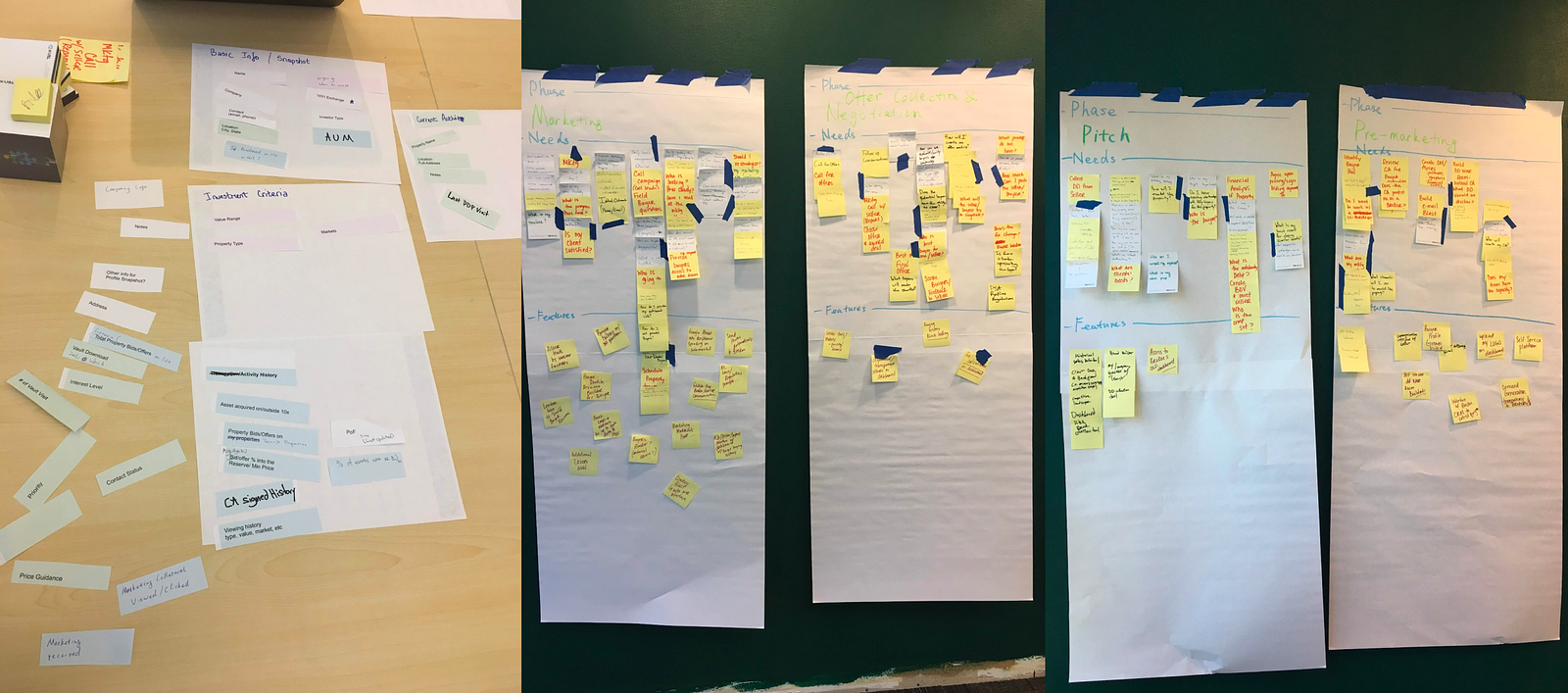 workshop
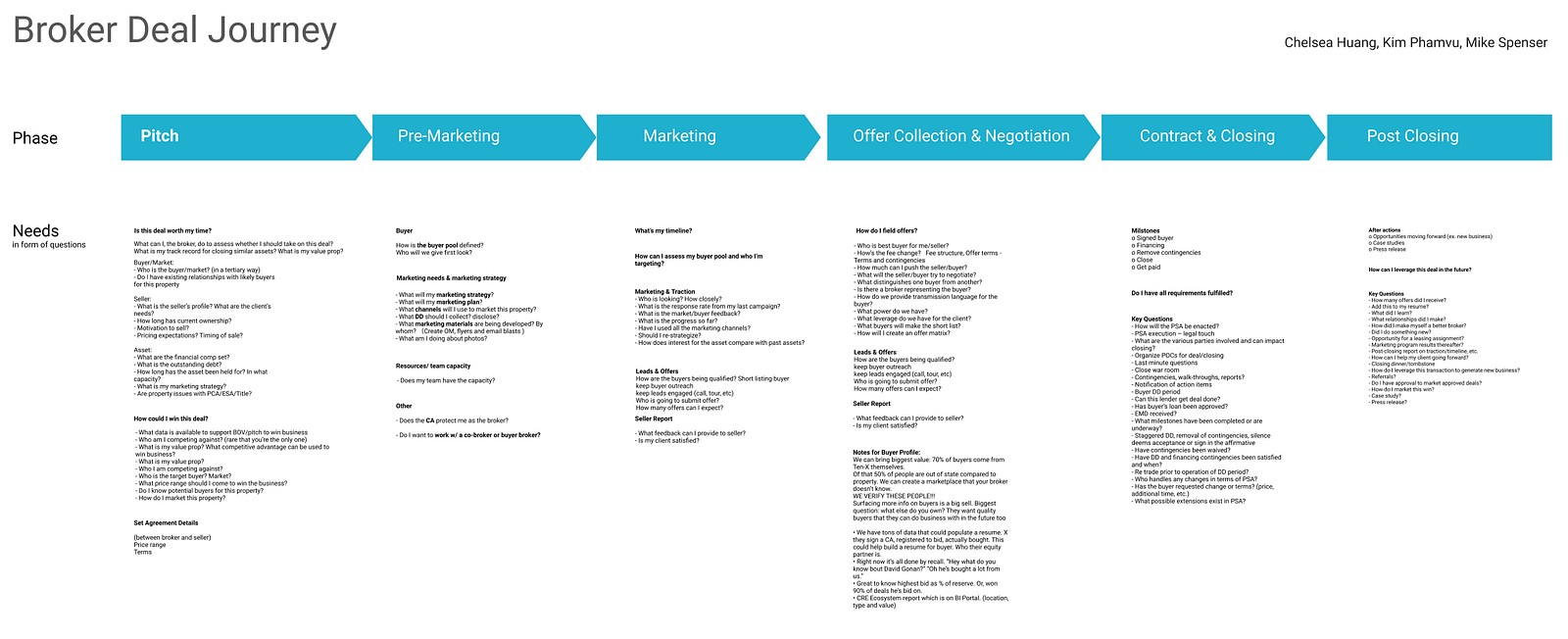
Design
The discovery set a very solid foundation for us as a product-design team to make quick agreement and move. Here is a few key decisions
- Phases to focus on: we quickly identified that we can make the biggest impact on phase 3 (marketing phase) and phase 4 (offer select or live auction).
- Page Layout: it became an easy decision once we know where and how we are going to meet the broker with buyer information. Two examples of the “meets” are conversation start point on mobile to a serious offer negotiation support.
- Lay the information into the structure, with more focus on what content and how the content flow. As the reading flow for each context being defined, the content was also polished (e.g. add local time for friendly calling; use illustration for property unsold and relisted property, etc)
- Details consistency and visual details. (e.g. how to best present bidding habit and profile matching rank.)
- Same time with 4, we consult legal and related department to finalized the availability of information to broker with the consideration of privacy and platform benefit, etc.
- Phase the entire project into a development plan with engineering.
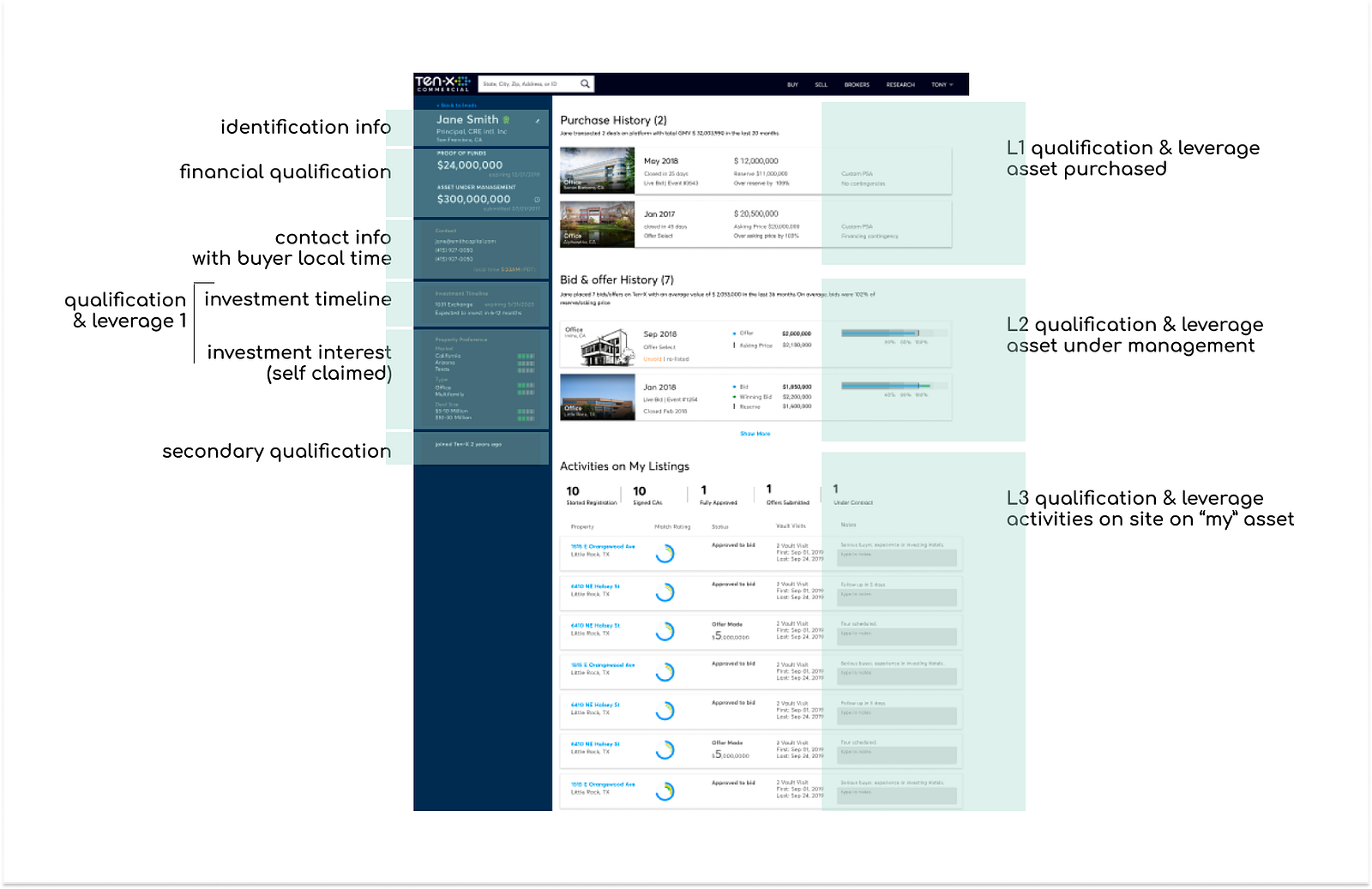 Layout